An older rendered house taken off its old heating and put onto a Clivet air source heat pump: outdoor unit, new unvented cylinder, new controls and a full set of correctly sized radiators through every room. Twenty photos from the actual job.
20 photos · Start to finish · every stage shown

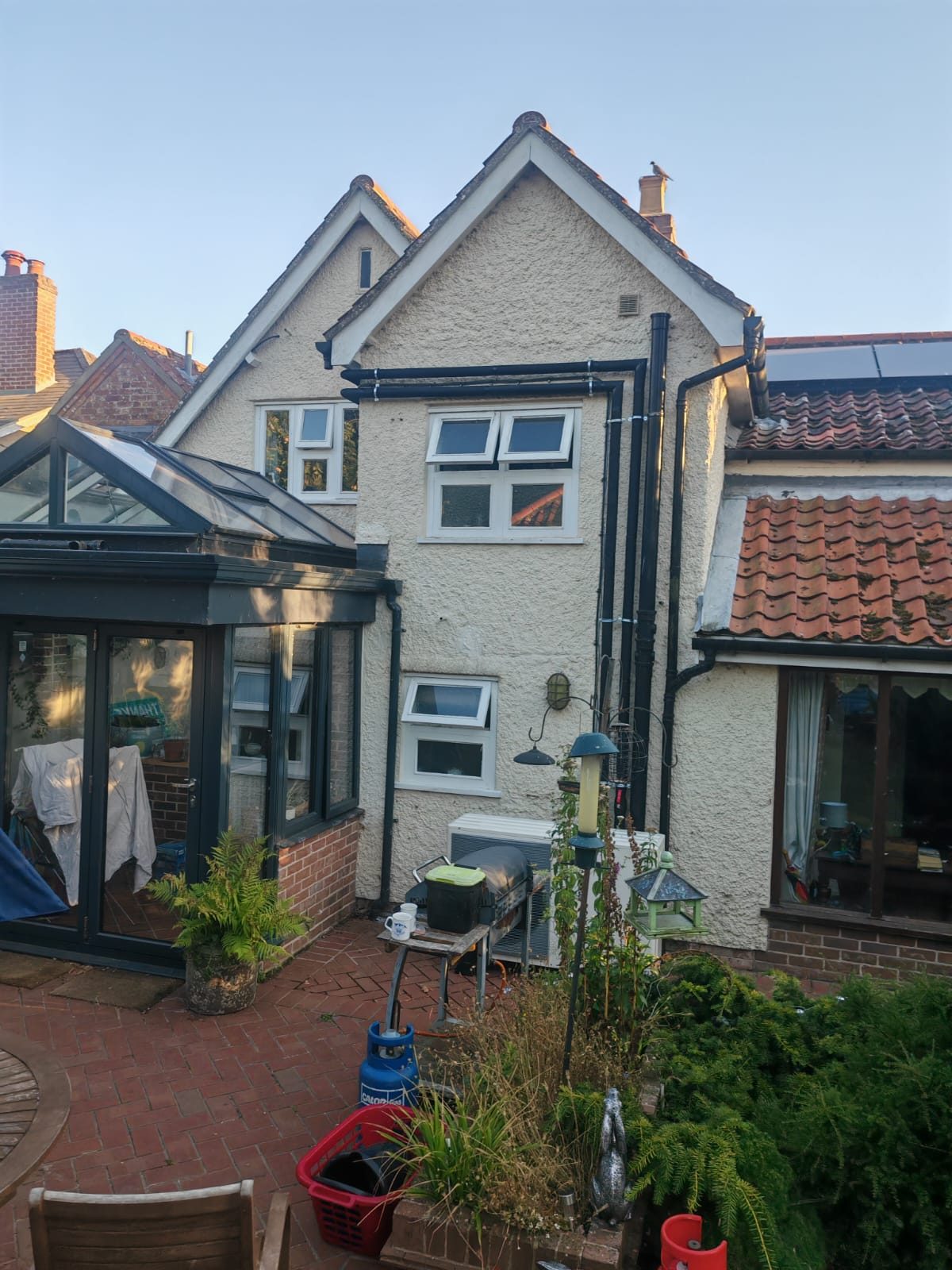
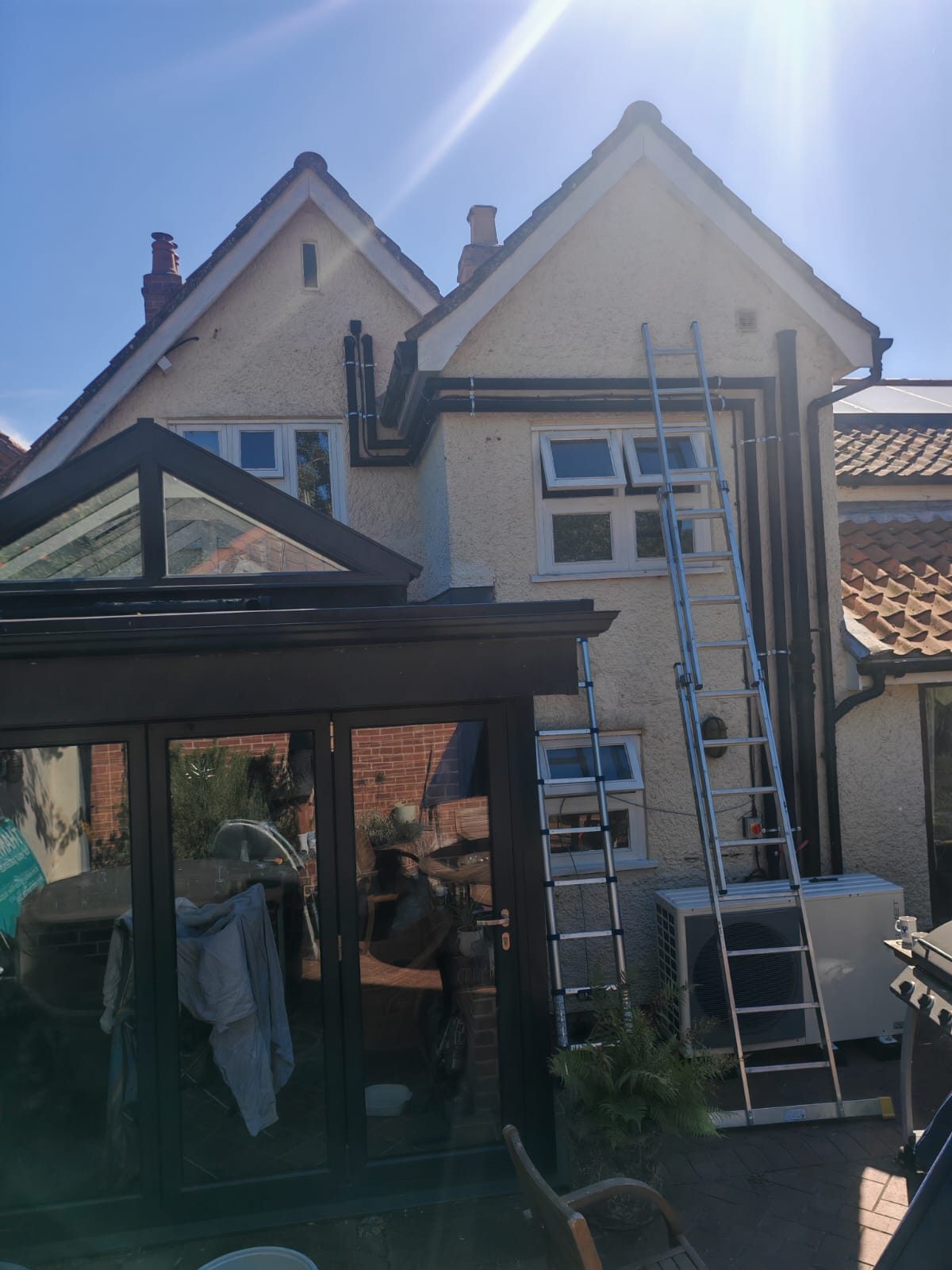
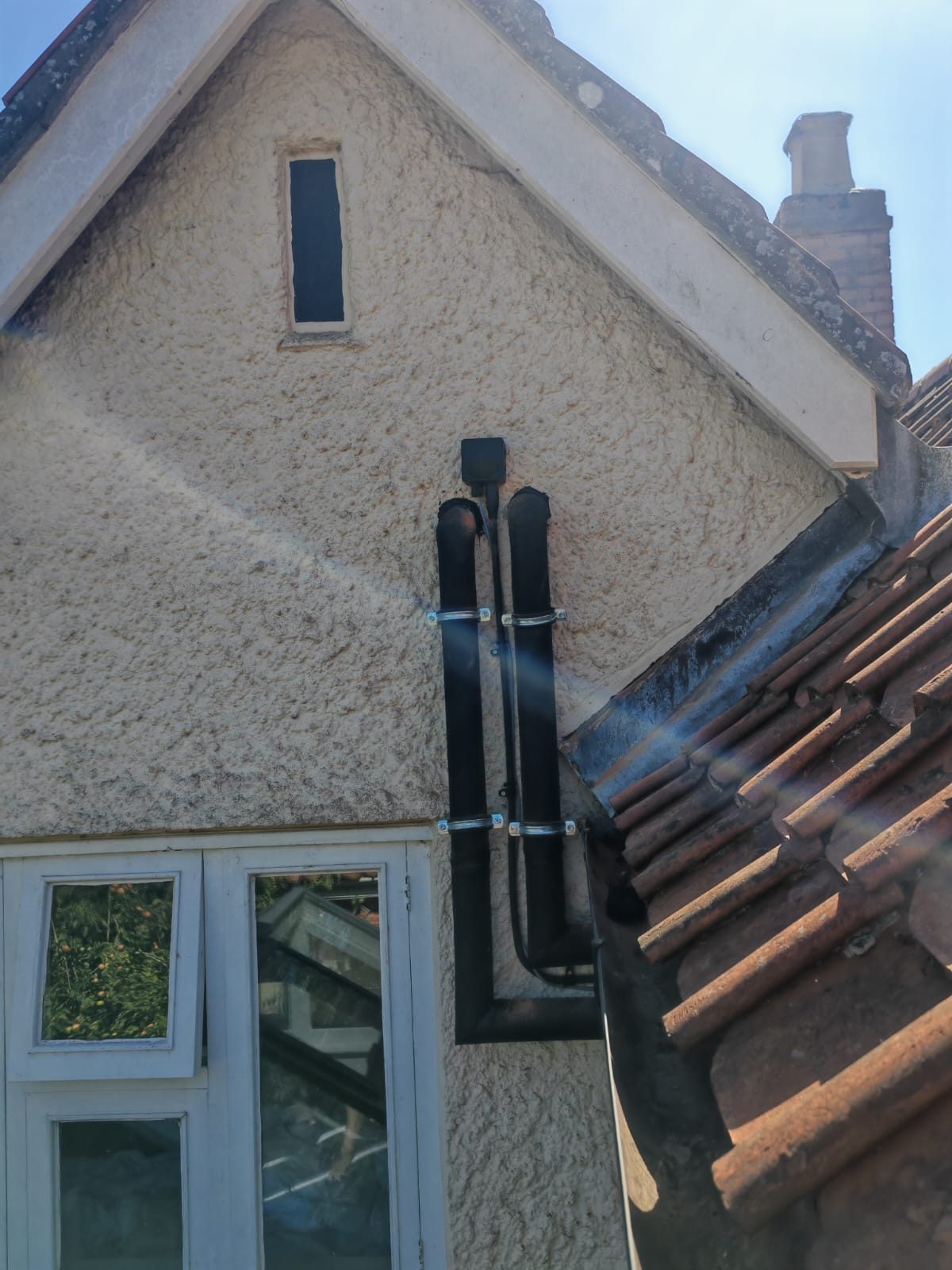
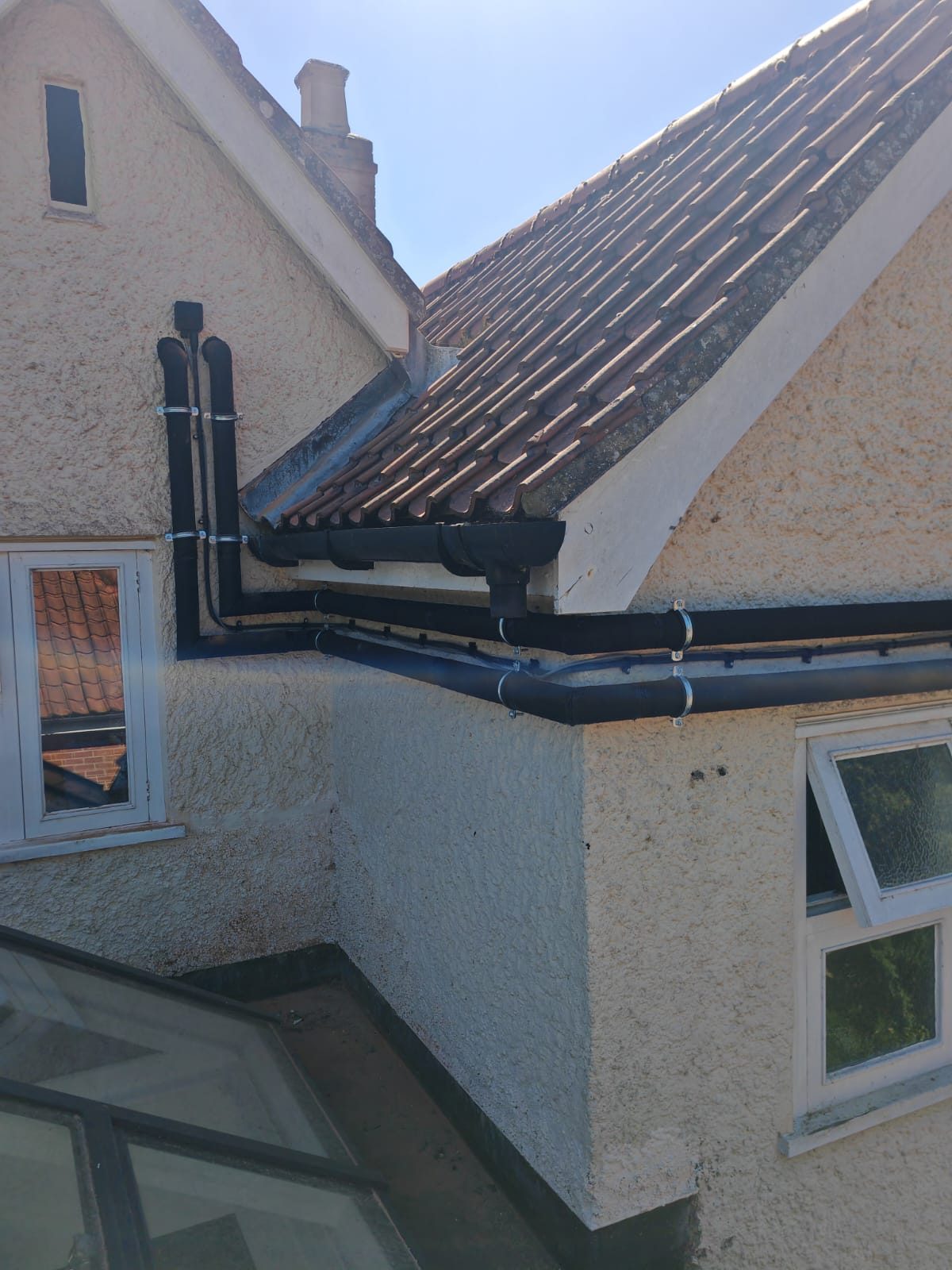
A heat pump job on an older house is not just the unit on the wall. Before anything went in we set out where the outdoor unit would sit, where the pipe runs would come through and how the condensate and drainage would be handled, so nothing had to be hacked about afterwards. New external pipework was run and clipped in black to sit against the rainwater goods rather than stand out against the render.


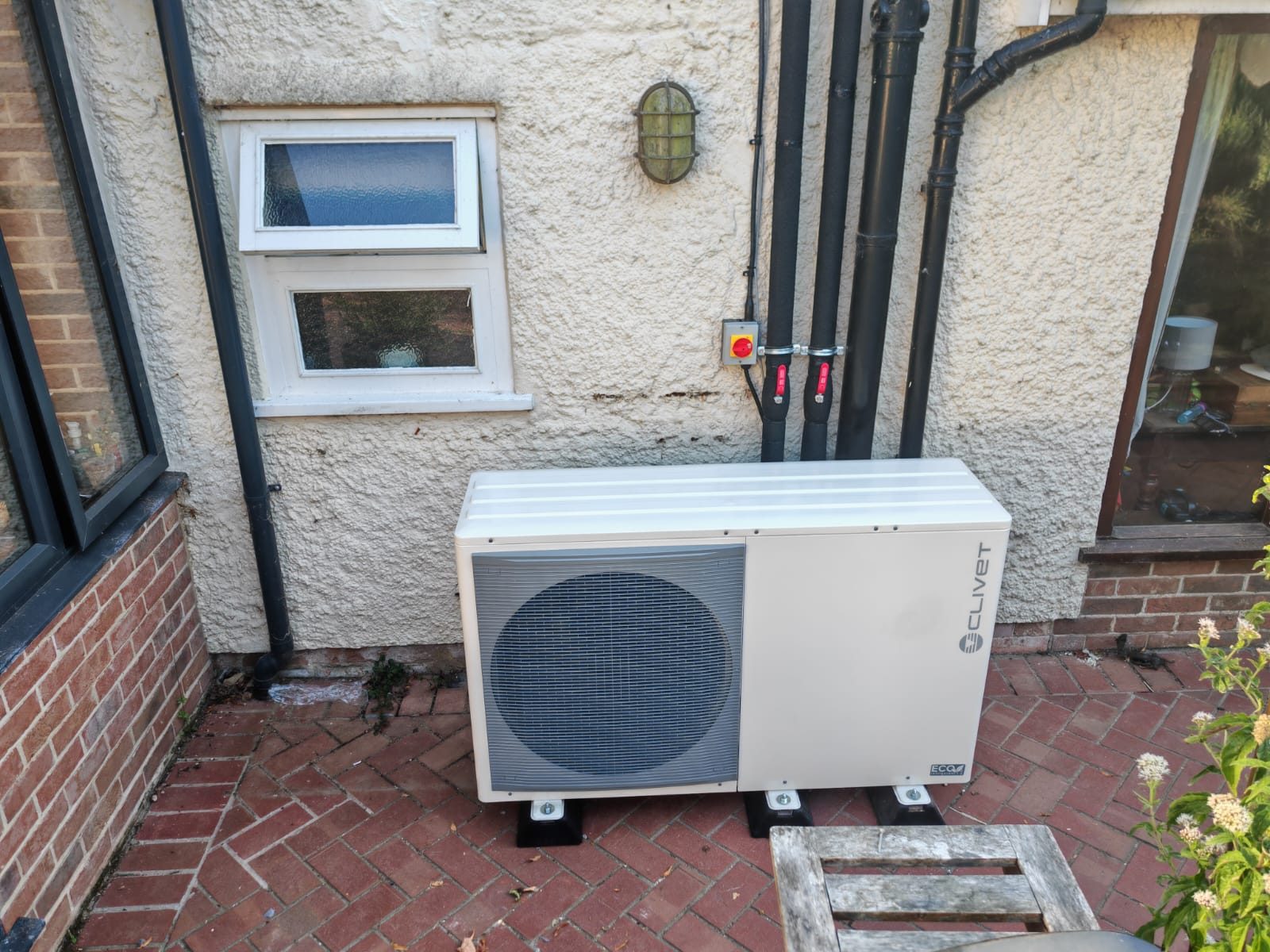
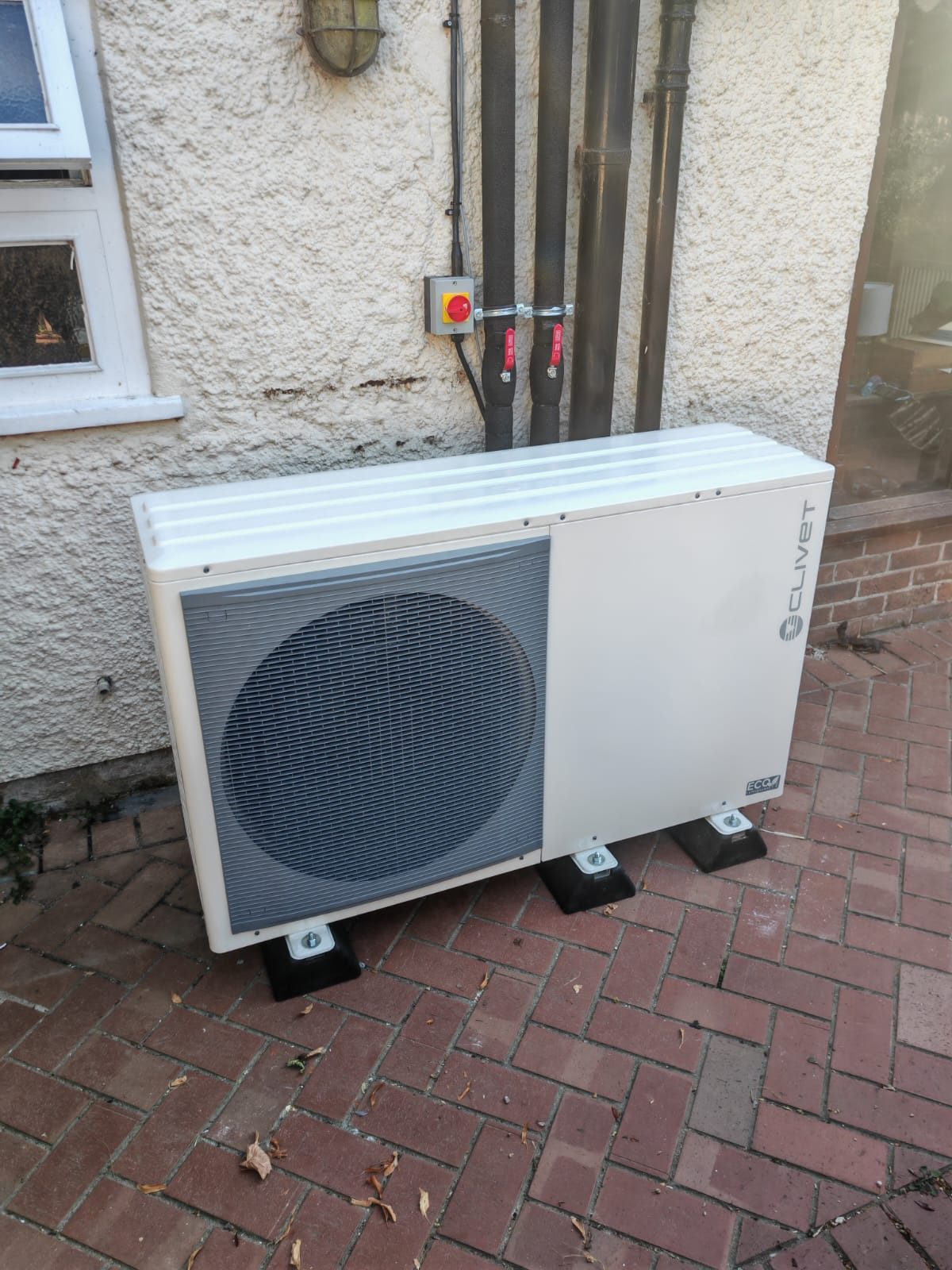
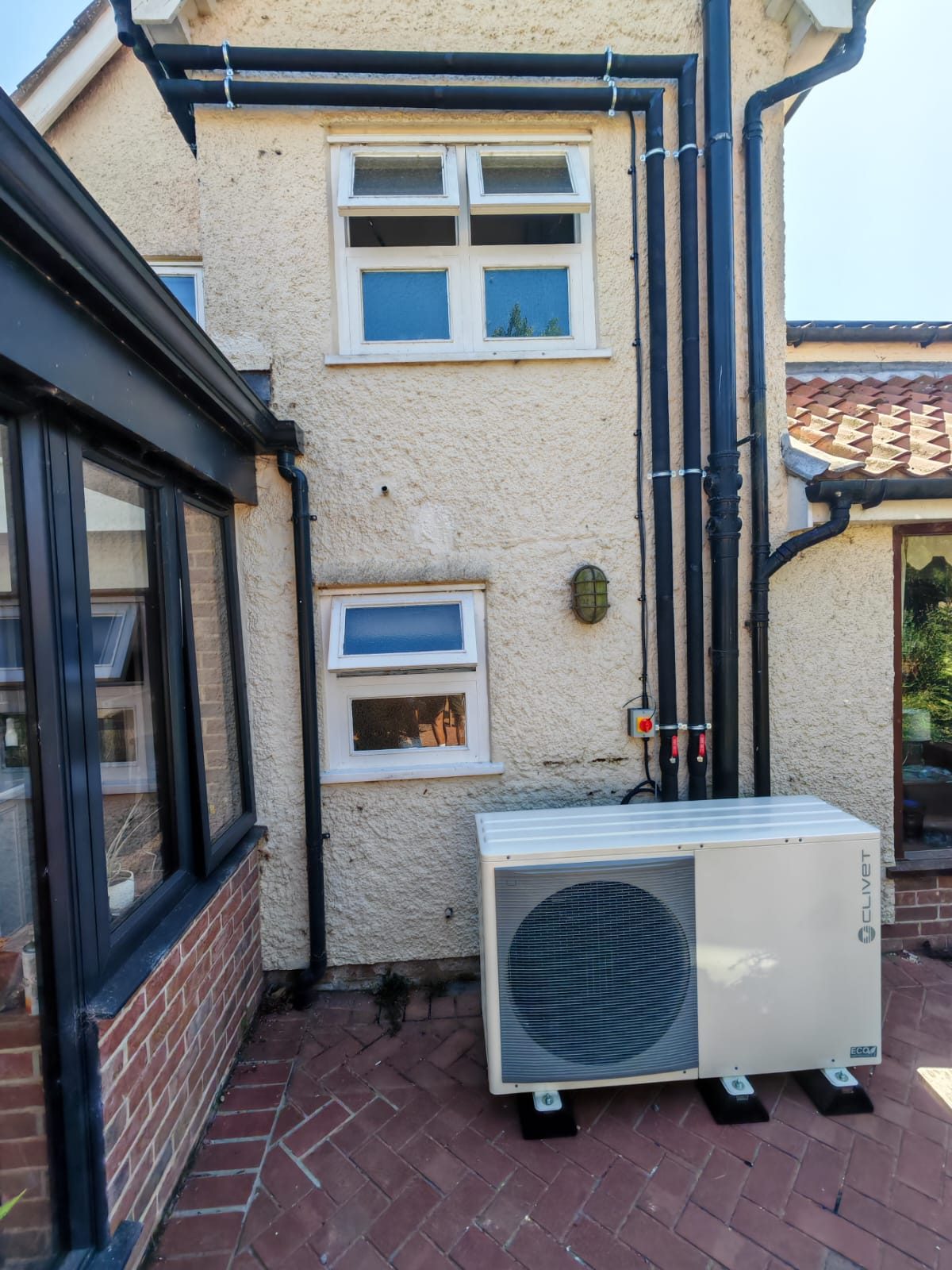
A Clivet monobloc air source heat pump, sat on anti vibration feet on the brick paving with clear air all round it so the fan is not fighting a wall. Flow and return are insulated and clipped straight, with isolation valves and a rotary isolator at working height. It sits tight to the house and out of the way, which is what most people want from the outdoor unit.


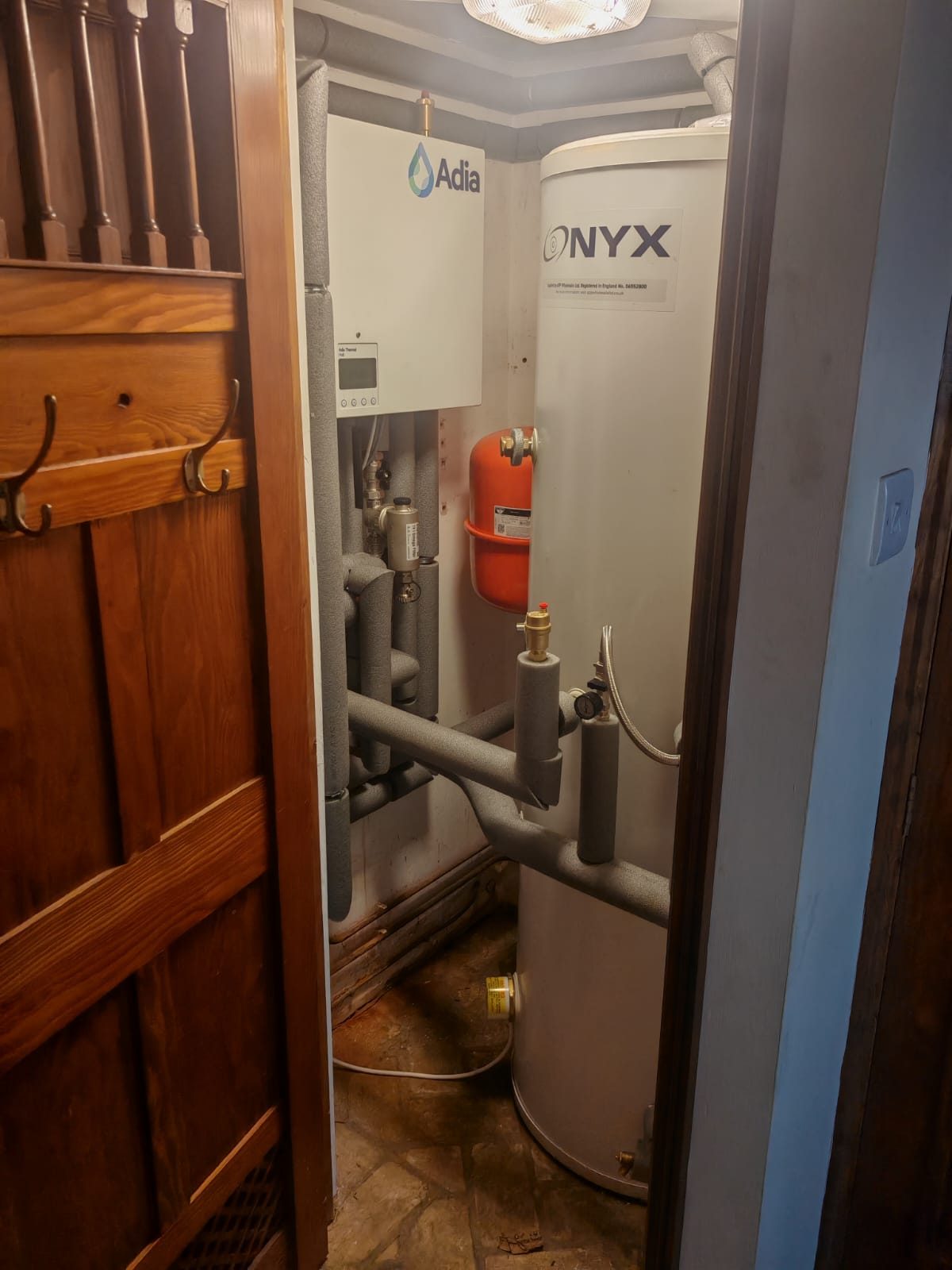
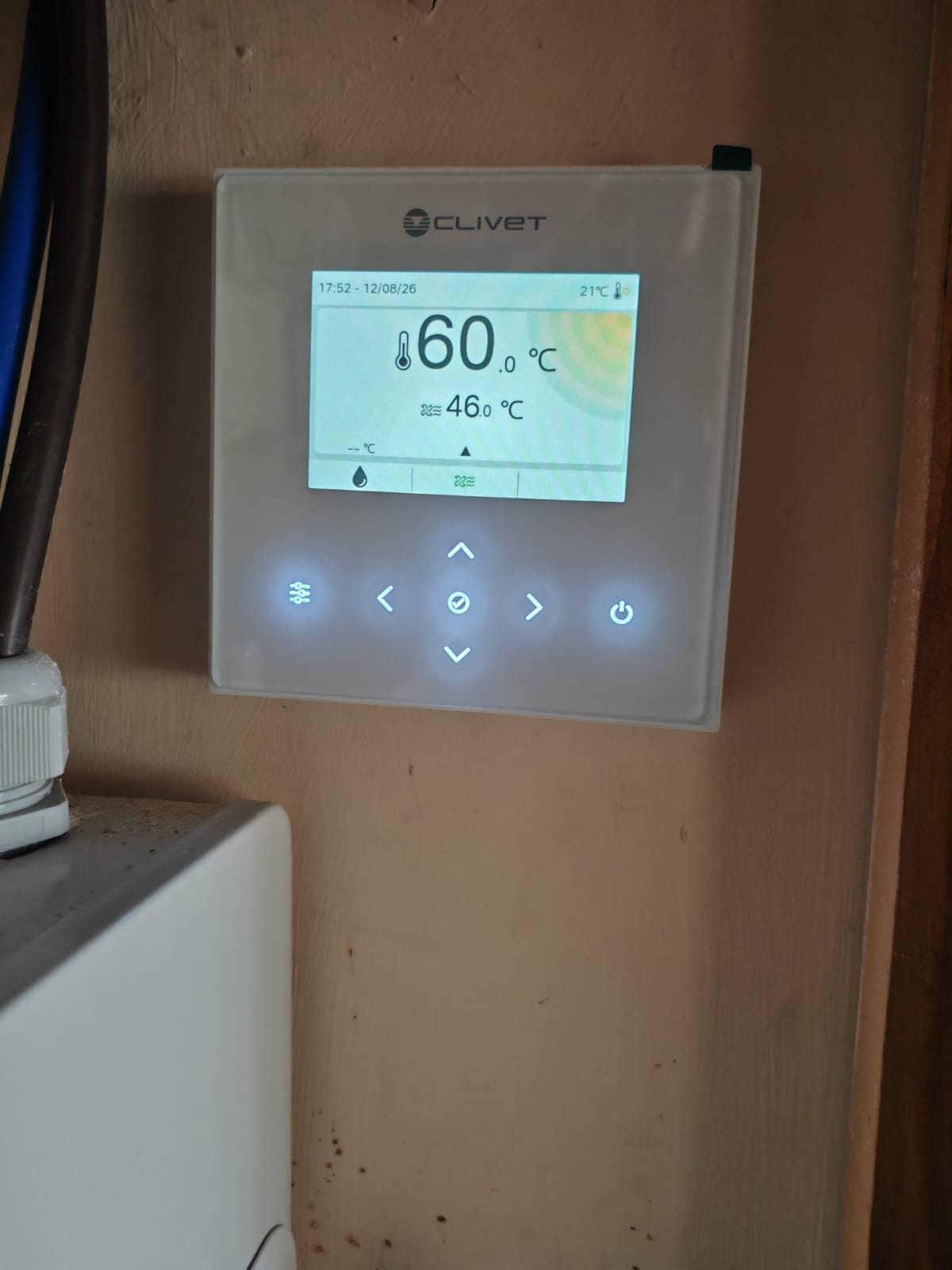
Inside, the cupboard now holds an Onyx unvented cylinder with the Adia hydraulic unit above it, expansion vessel, and every pipe run insulated and supported rather than left loose. The Clivet controller went on the wall where it can actually be read, so the house has one clear place to set temperatures and hot water instead of a mix of old dials.


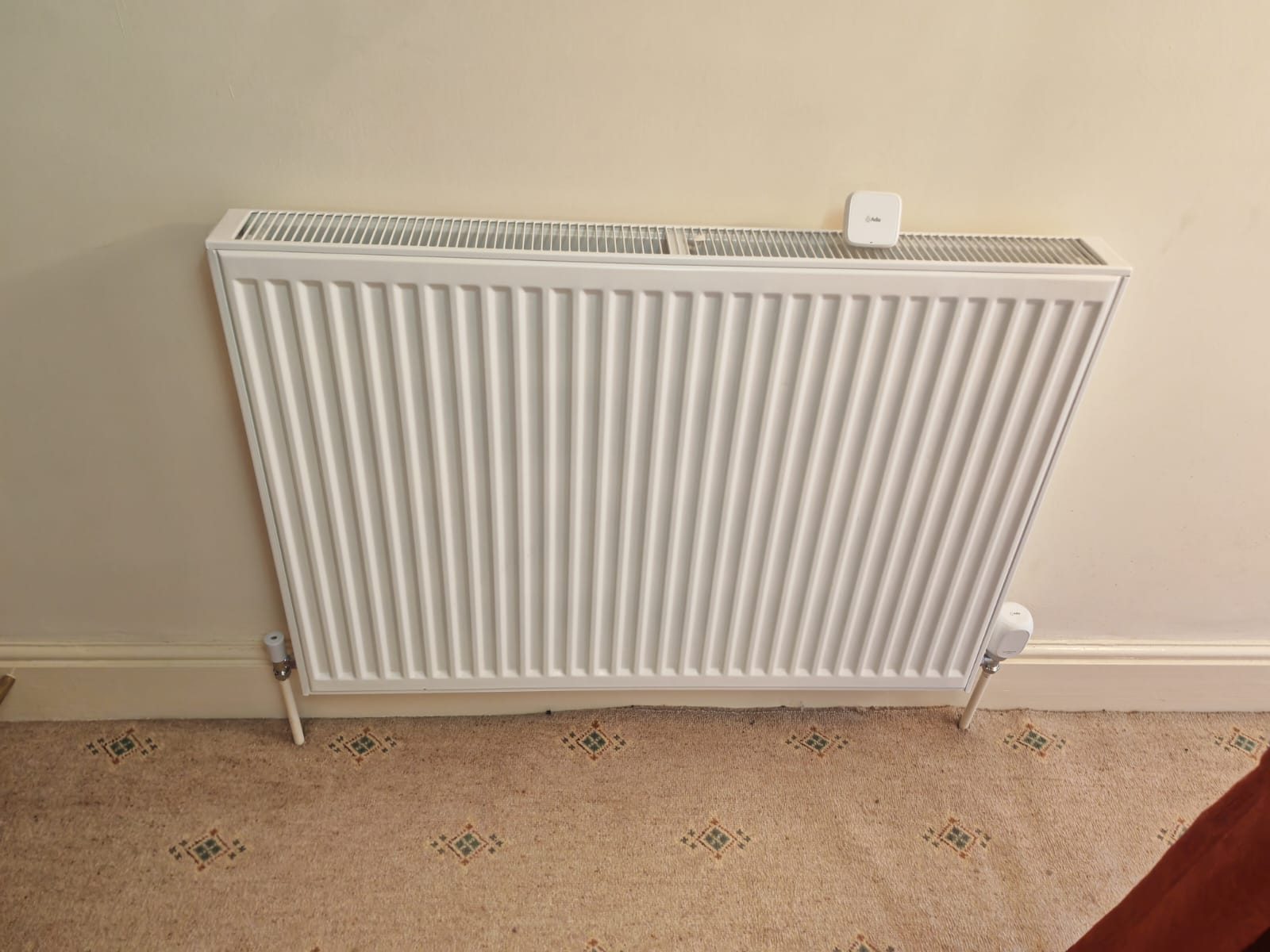
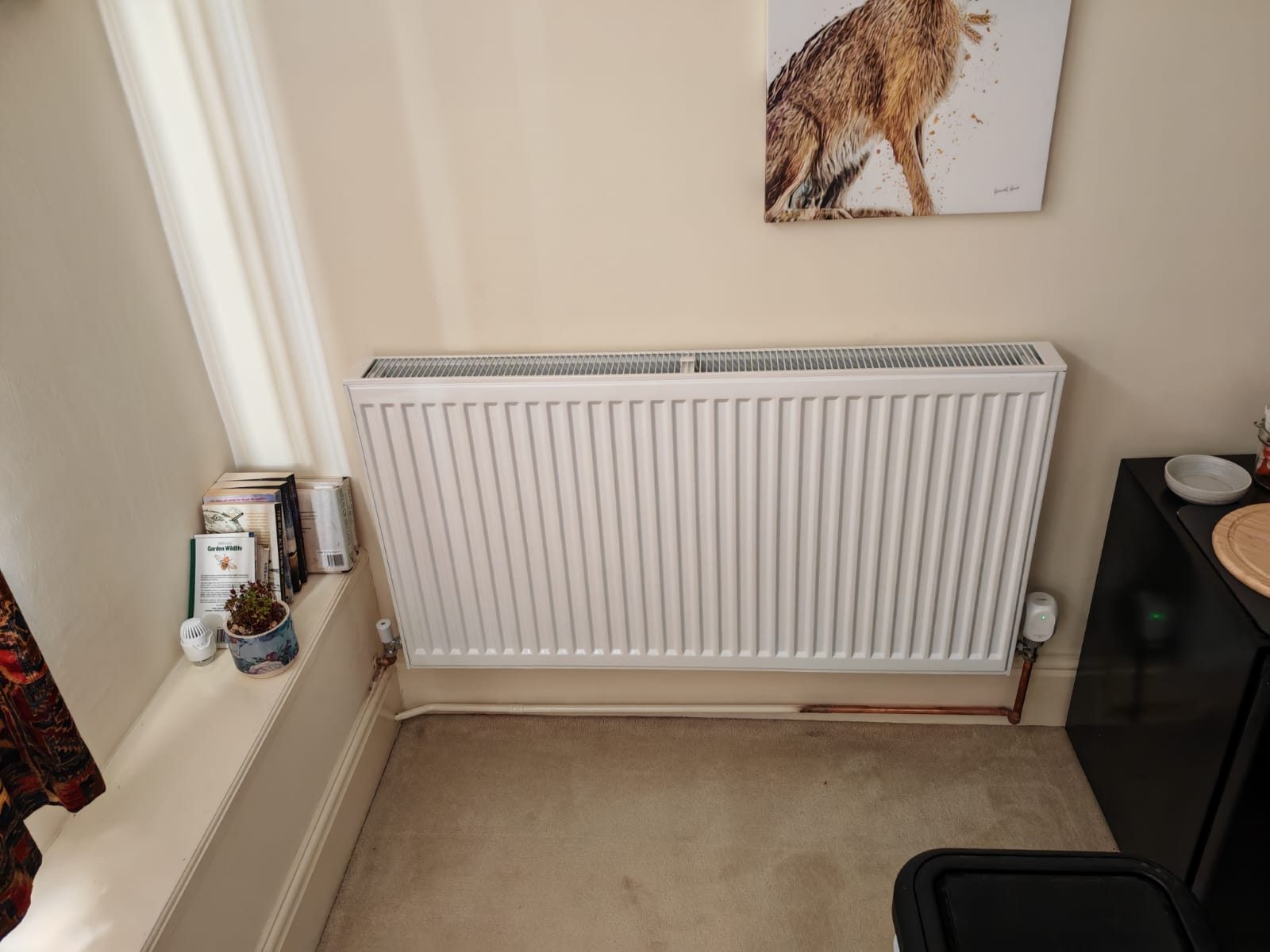
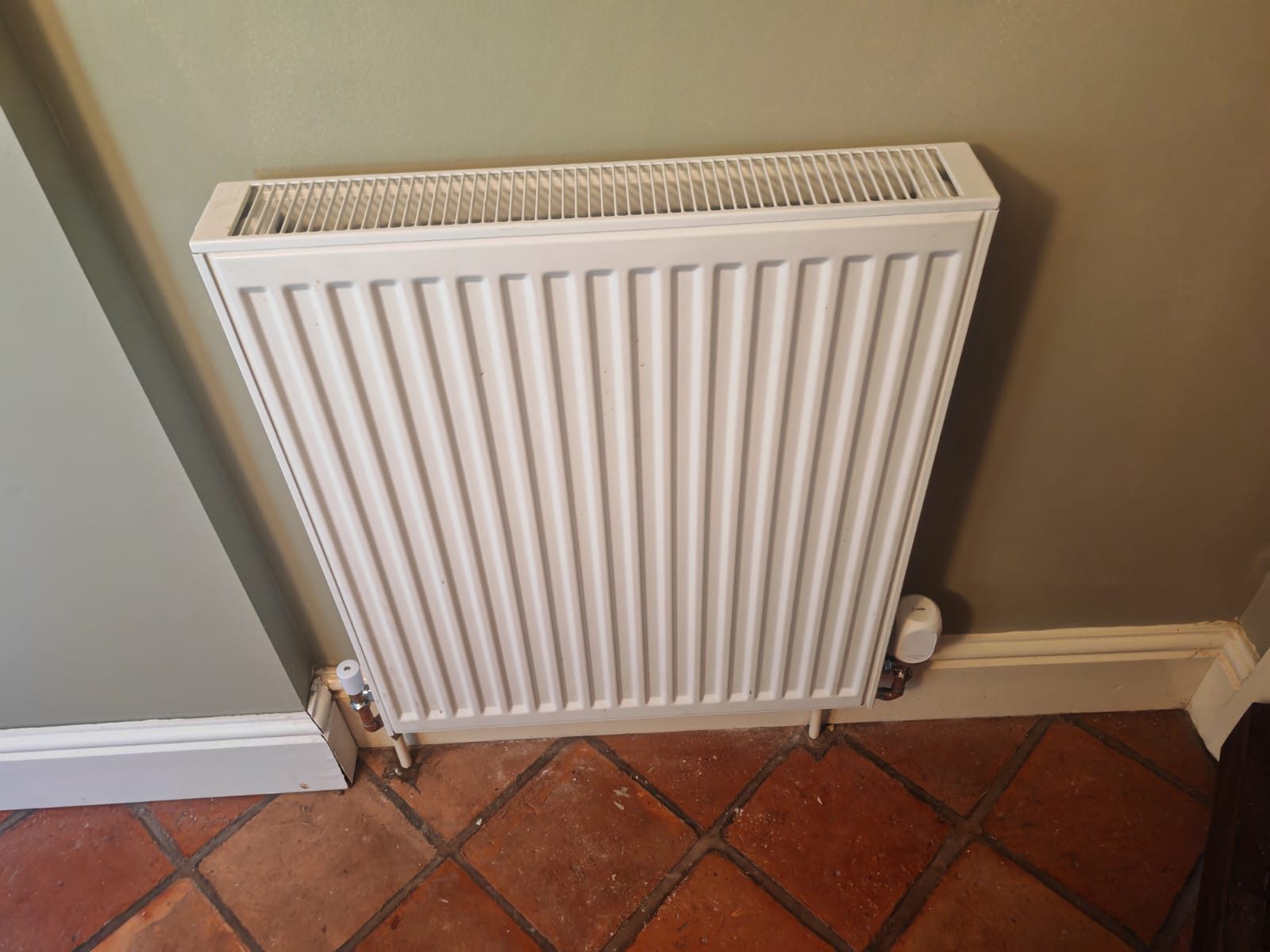
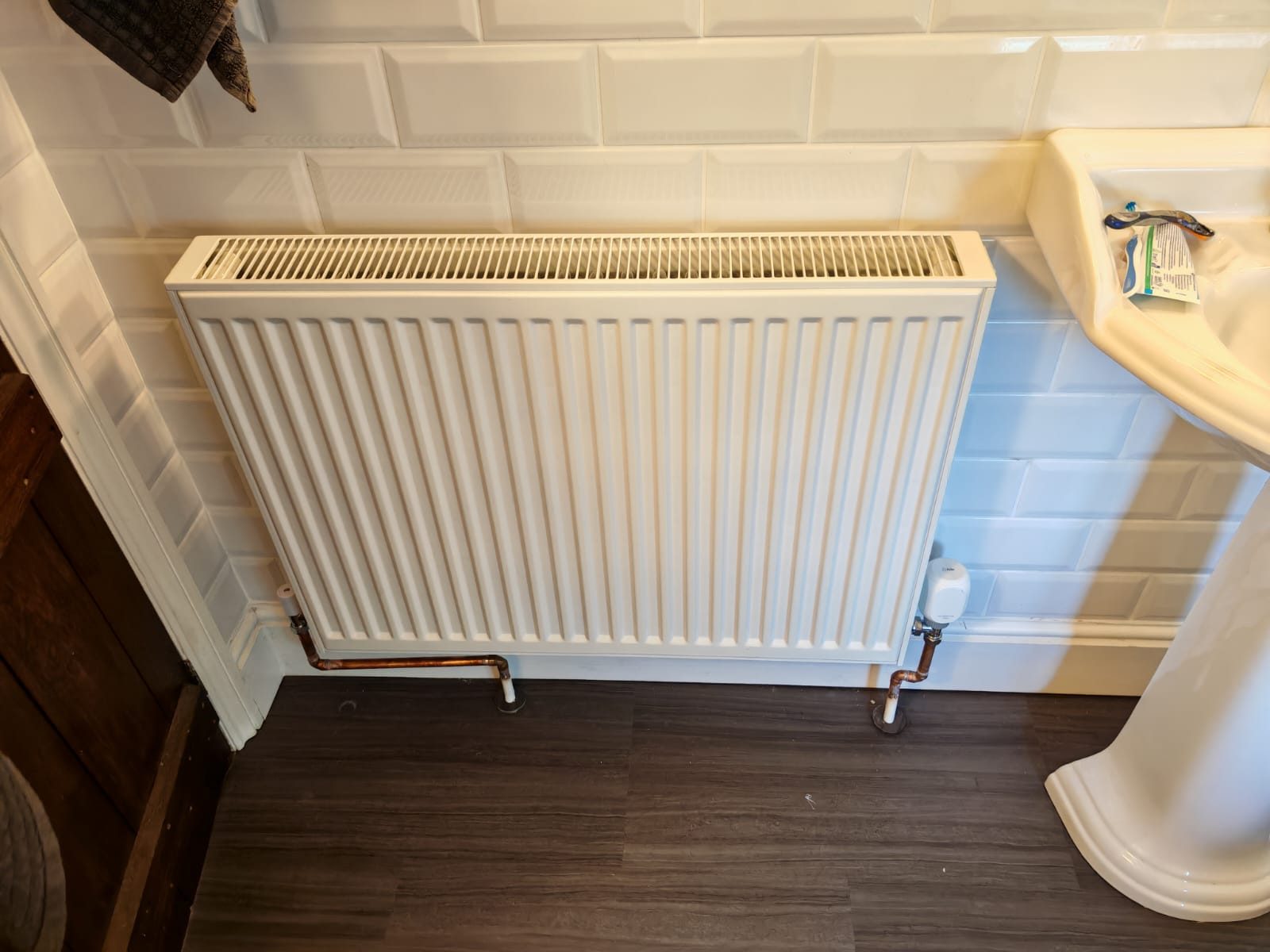
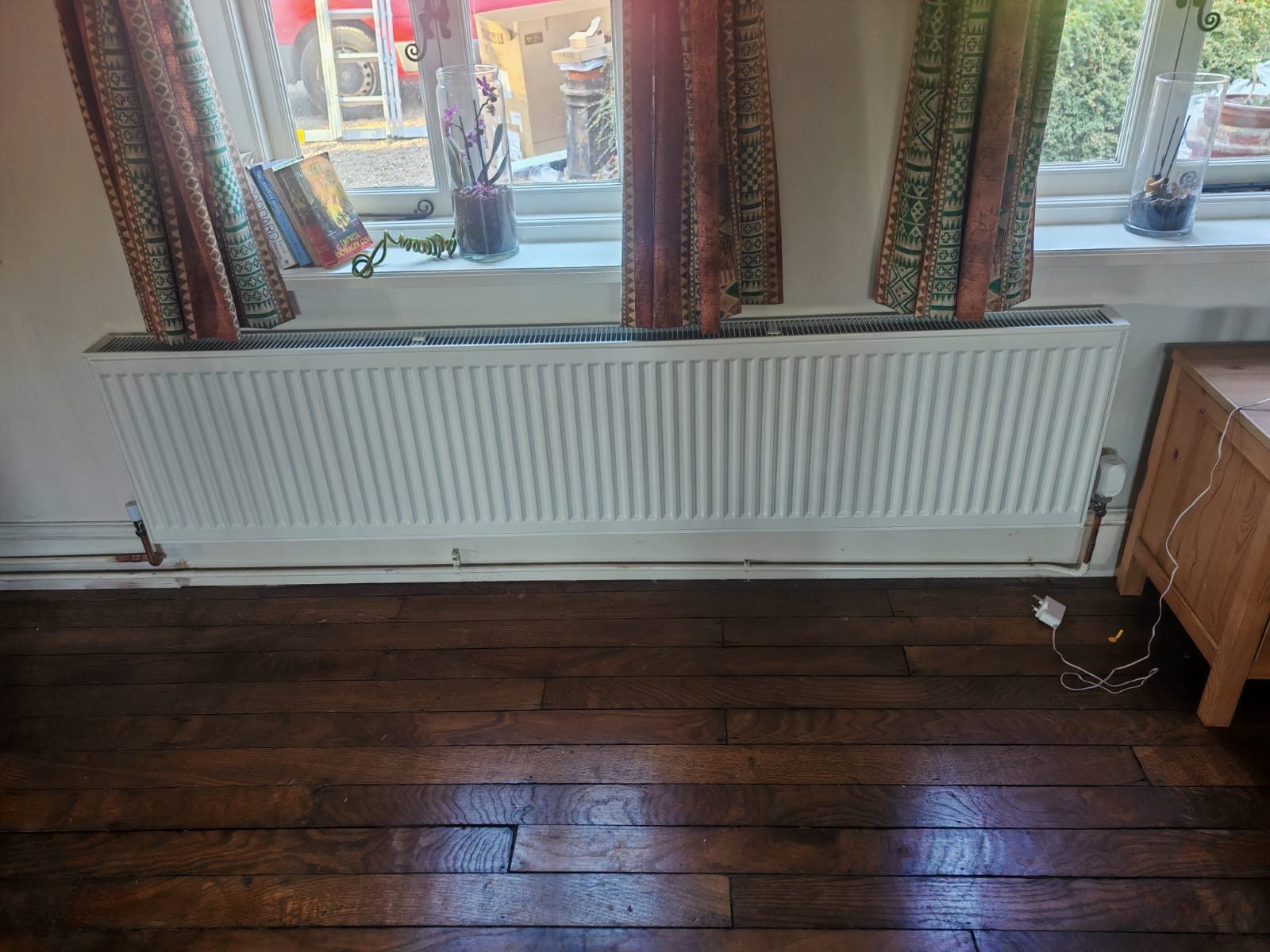
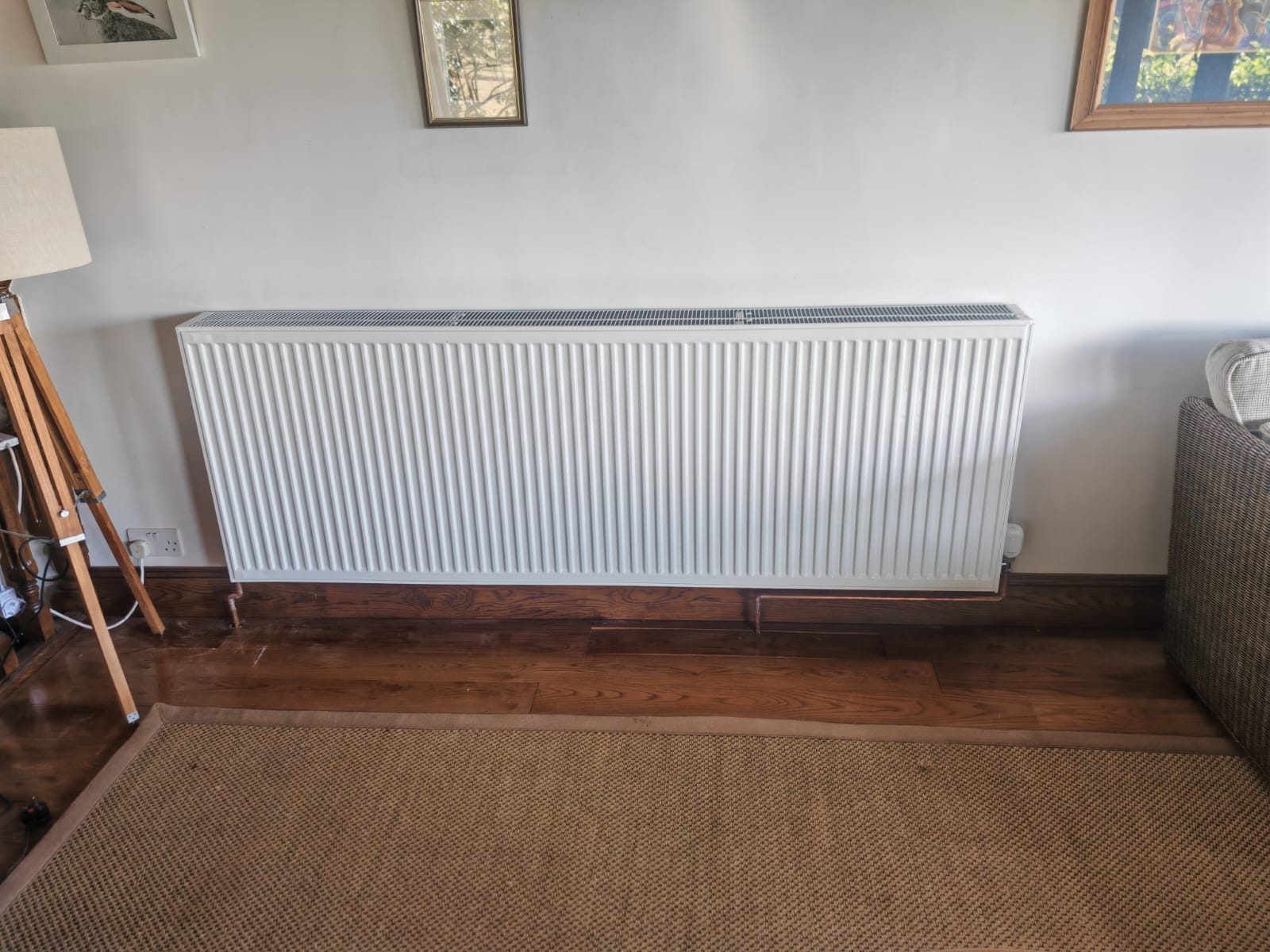
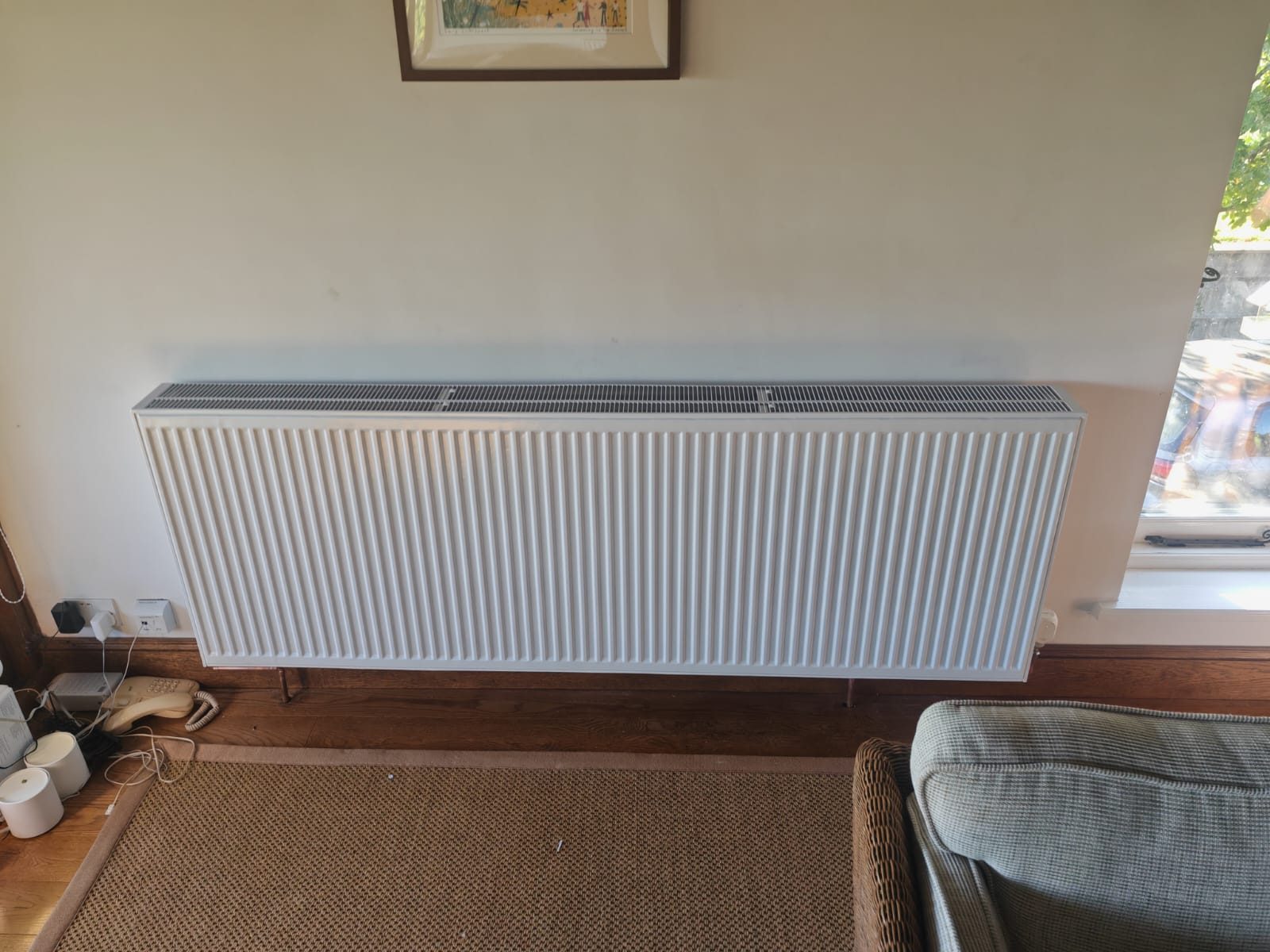
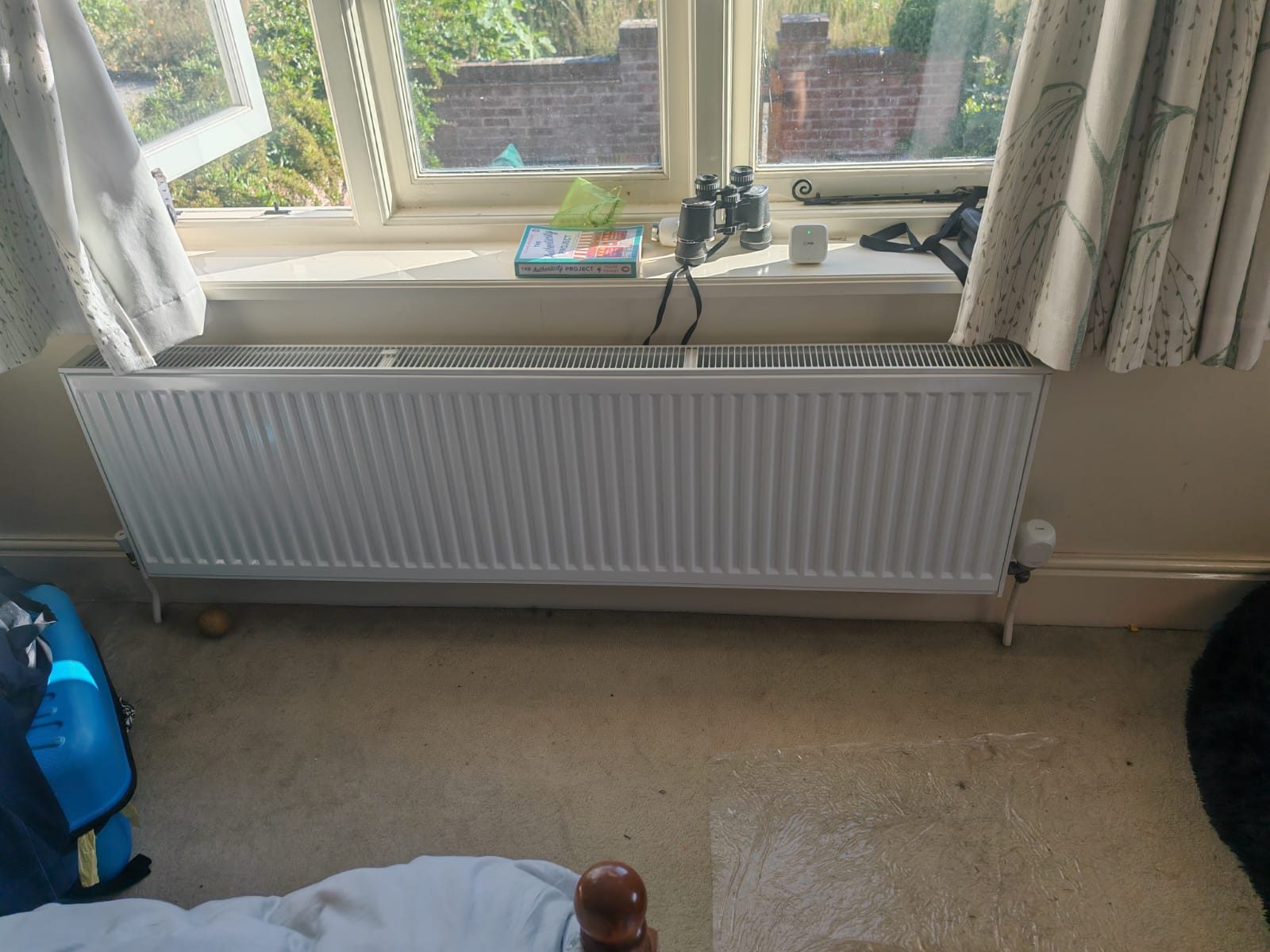
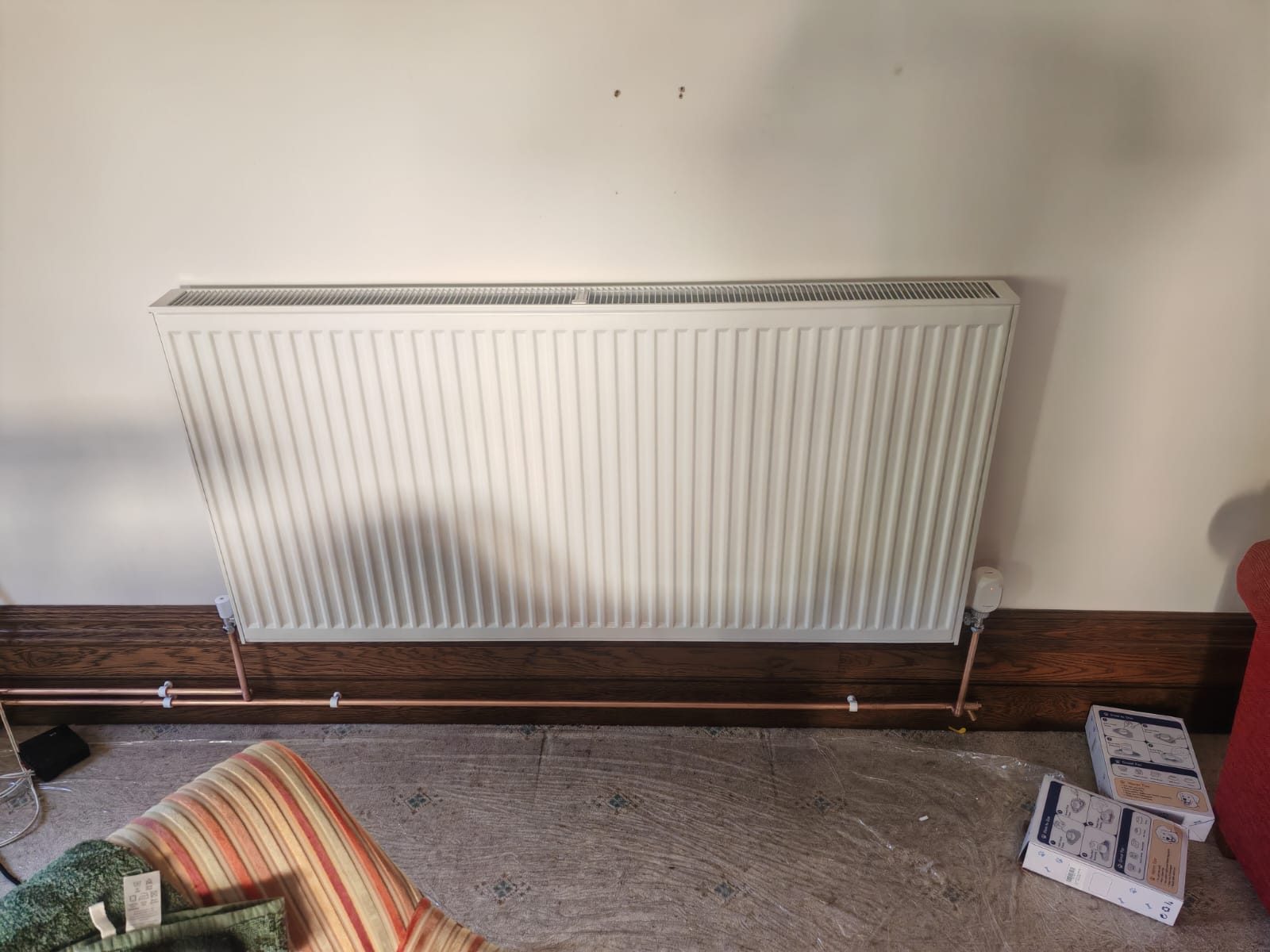
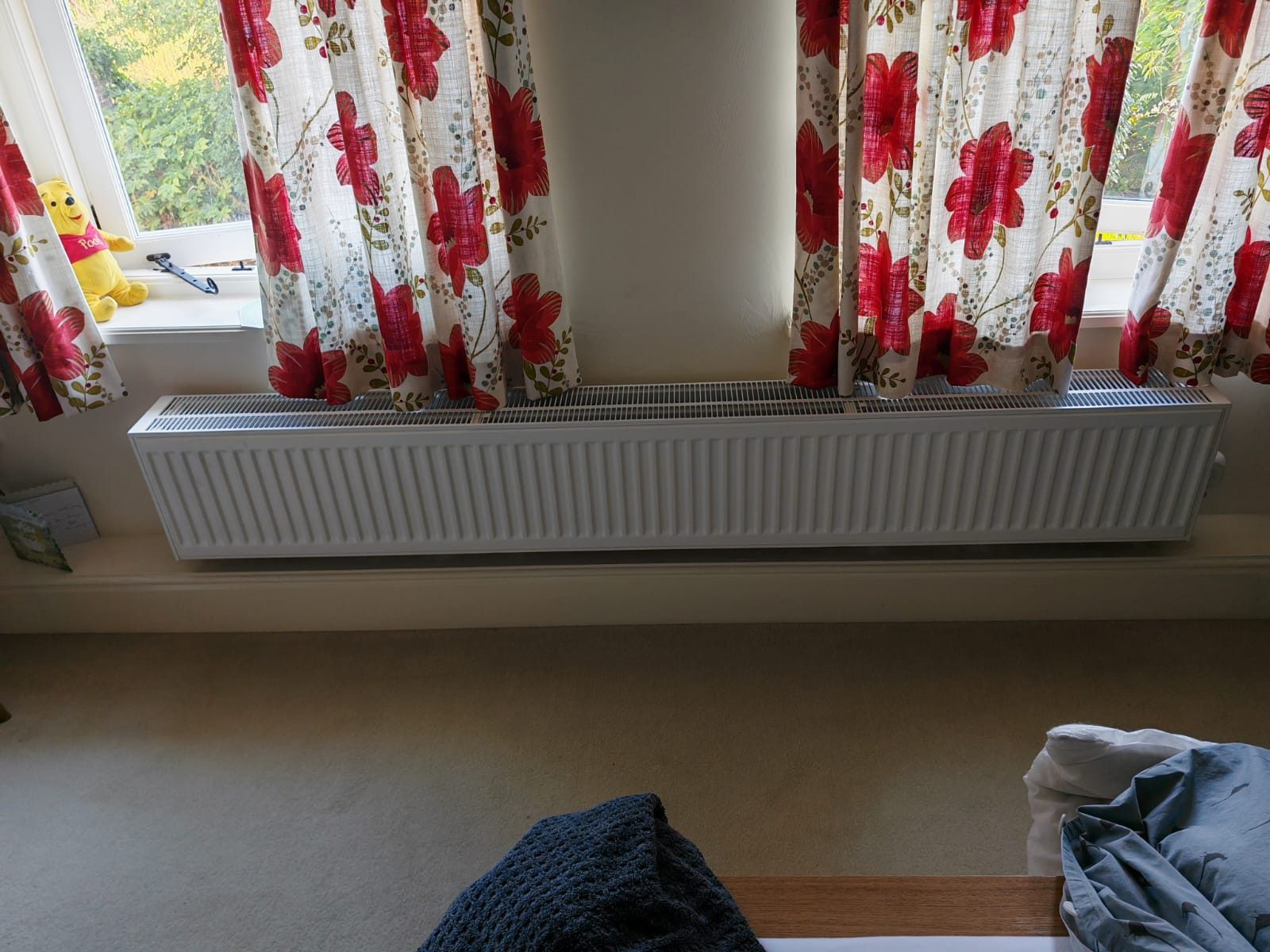
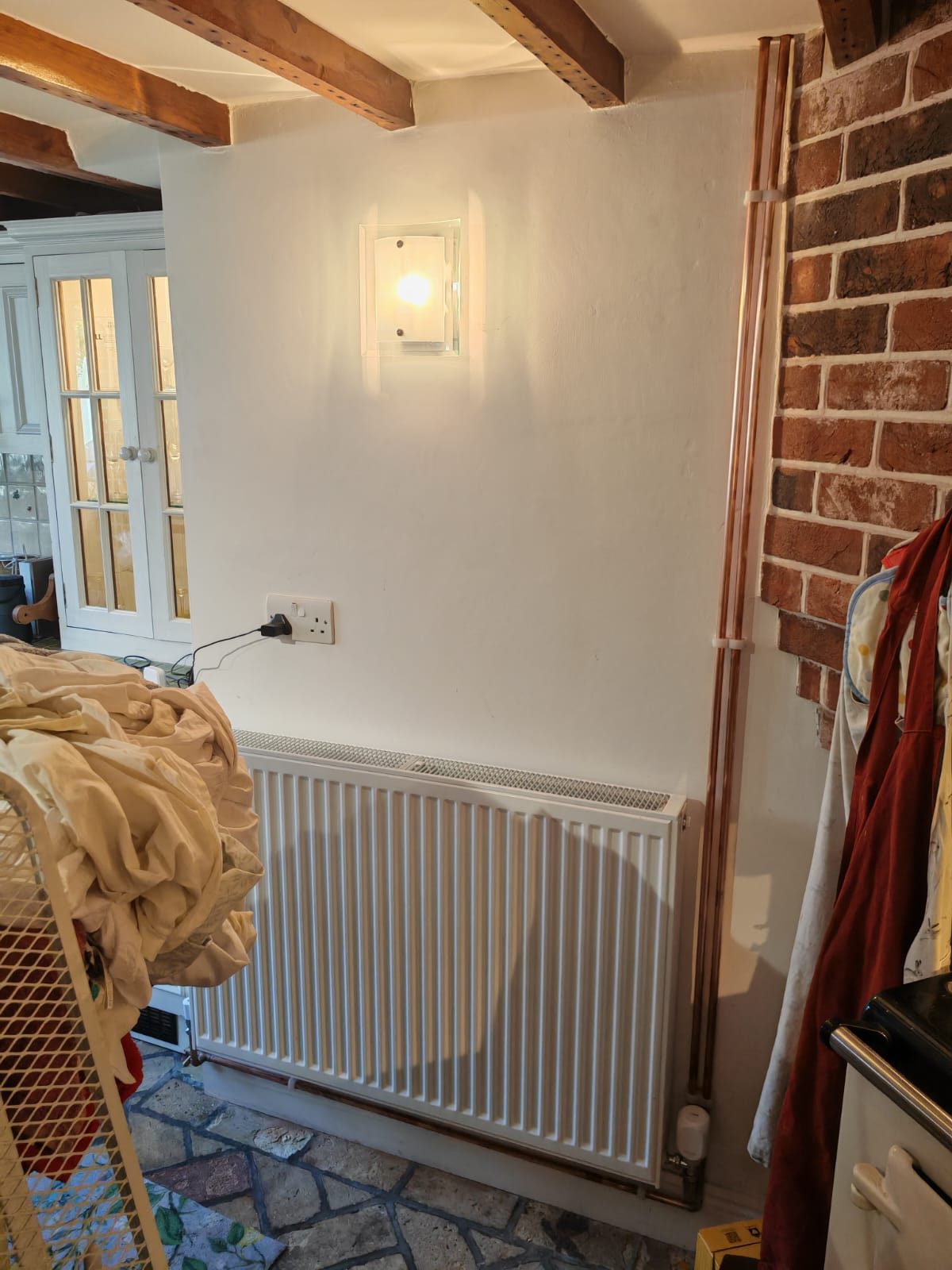
This is the part people underestimate. A heat pump runs at a lower flow temperature than a gas boiler, so the old radiators would not have kept the house warm. Every room was measured and got a new radiator sized for the heat loss, which is why a lot of them are longer and deeper than what came out. Valves, tails and pipe drops were done the same way in every room so the finish is consistent from the kitchen to the back bedroom.